Hail Risk and Preparedness for Businesses
Hailstorms can damage roofs, equipment and vehicle fleets in minutes. Learn how hail impacts businesses and how organizations can reduce risk.
Understanding Hail Risk for Operations
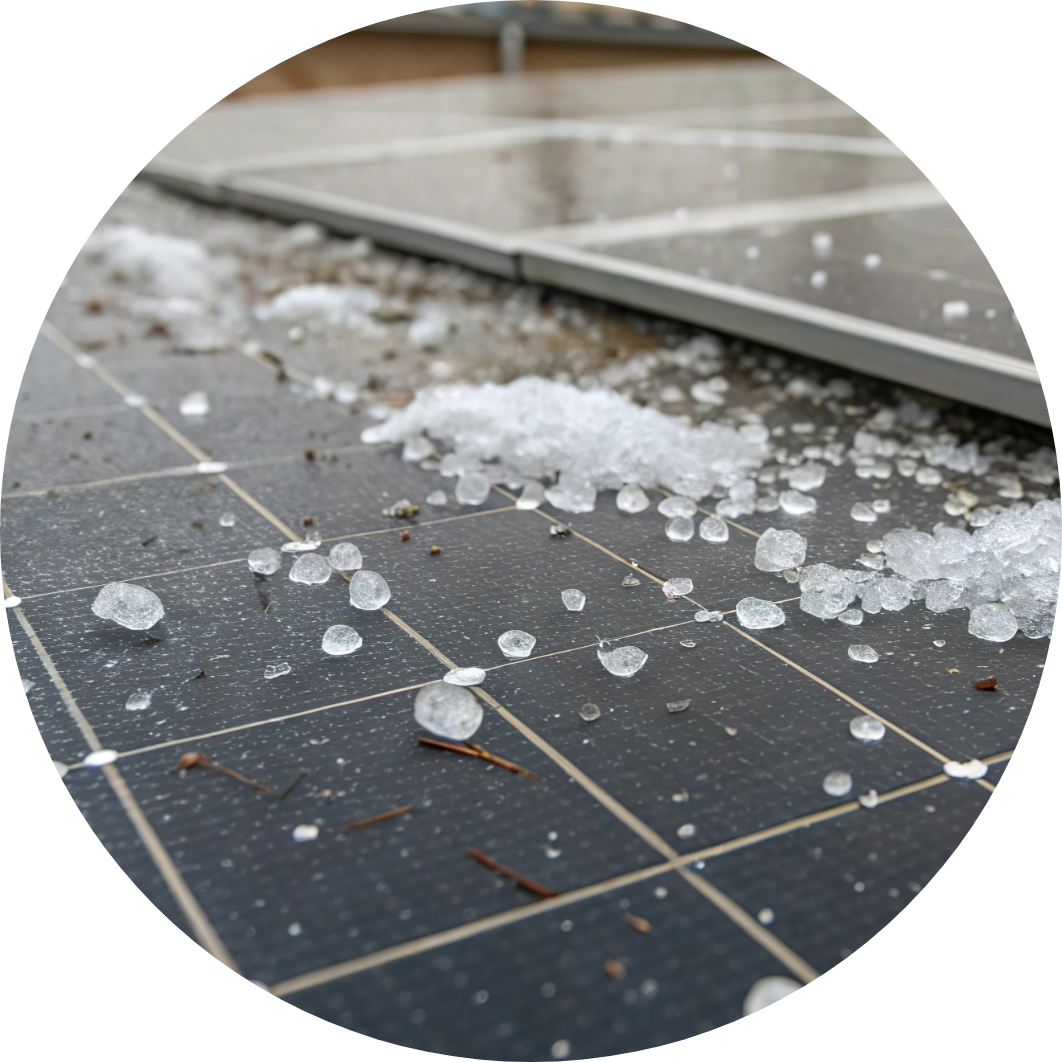
Hail is one of the most damaging hazards produced by severe convective storms. Large hailstones can fall with significant force, damaging roofs, skylights, vehicles, solar panels and exposed mechanical equipment. Even short hail events can result in costly property damage and operational disruptions for businesses.
For organizations that rely on large facilities or outdoor assets, hail risk can be particularly significant. Damage to roofing systems, equipment or vehicle fleets can interrupt operations and require extensive inspections and repairs. In many cases, hail damage may not be immediately visible, which can allow problems such as leaks or structural deterioration to develop over time.
How Hail Forms
Hail forms inside strong thunderstorms when powerful updrafts lift water droplets high into freezing areas of the atmosphere. As these droplets freeze and are repeatedly lifted within the storm, they accumulate layers of ice and grow larger before eventually falling to the ground as hailstones.
The size and intensity of hail events often depend on storm strength and atmospheric conditions. When these storms pass over commercial facilities, they can produce widespread damage within minutes.
Hailstorms can affect a wide range of commercial assets and infrastructure. Businesses with large facilities or outdoor equipment may experience damage that impacts both property and operations.

Common risks include:
- Roof membrane punctures or structural damage
- Damage to skylights, solar panels and rooftop equipment
- Vehicle fleet damage
- Dented HVAC units and mechanical systems
- Damage to outdoor equipment, materials or inventory
Even moderate hailstorms can weaken roofing materials and create vulnerabilities that lead to water intrusion or structural issues later.

Building Long Term Hail Resilience
Hailstorms cannot be prevented, but proactive planning can reduce their impact. Businesses that assess vulnerabilities and protect critical assets are better prepared to reduce damage, control repair costs, and maintain operations during severe weather.
Download The Toolkit Today
Hail is just one of several hazards associated with severe convective storms. Download the Convective Storm Toolkit to learn how businesses can prepare for hail and other severe weather risks.